GrowHab,
68 Andrew Lloyd Drive,
Doonside, NSW 2767
Quick Answer
A suburb showing rising population, tight supply, low vacancy, falling days on market and funded infrastructure nearby is a stronger candidate than one relying on a single strong headline figure.
To find a genuine high-growth suburb, look at data points from credible statistical agencies. The major five data points are population growth (ABS), building approvals relative to existing stock (ABS), vacancy rate (SQM Research), days on market and vendor discount (Cotality), and confirmed infrastructure spending (state budgets, Infrastructure Australia).
"Where should I buy?" is the question every property investor asks, and it's usually answered with opinions rather than data. Real estate agents promote their listings, buyer's agents suggest their preferred areas, and social media is full of "hotspot" predictions. The more useful approach, and the one GrowHab's buyers agents use for clients, is to look at the same indicators the data analysts use, at the suburb level, before deciding where to invest.
City-level growth figures can also be misleading on their own. Within any capital city, the gap between the strongest and weakest performing suburbs in a given year is typically wide enough that suburb choice matters more than which city you're looking at. That's the core reason a systematic, data-led approach beats chasing headlines.
The Australian Bureau of Statistics (ABS) publishes Estimated Resident Population (ERP) figures by SA2 (a geography roughly equivalent to a suburb) every year, free of charge. It's the same data behind most "fastest growing suburb" headlines, but it comes with a trap: percentage growth from a small base can be misleading. A suburb growing from 200 to 400 residents technically doubles, but adds very little real housing demand. Absolute population growth, paired with building approvals, gives a clearer read on genuine demand pressure.
Also published by the ABS, monthly building approvals data by LGA and SA2 shows how much new supply is coming into a suburb. As a general rule, if annual approvals exceed roughly 3% of a suburb's existing housing stock, supply may be outpacing demand. Nationally, dwelling approvals have been running below the Housing Accord's target of 240,000 homes per year, which is one of the reasons under-supply continues to support prices and rents in many established suburbs.
SQM Research publishes free vacancy rate data by postcode. As a general guide, a vacancy rate below 2% indicates a tight rental market, and below 1% is considered very tight. Vacancy rates vary significantly between capital cities and between individual suburbs within the same city, so it's worth checking the suburb-level figure rather than relying on the city-wide average.
Days on market (how long a property takes to sell) and vendor discount (the gap between the original asking price and the final sale price) are both published at suburb level by data providers such as Cotality. Falling days on market and shrinking vendor discounts generally point to a tightening, more competitive market. Rising figures on both counts can indicate a market that's starting to cool.
New transport lines, hospitals and employment hubs tend to lift demand in the suburbs within their catchment. The federal government has committed significant funding to state infrastructure for 2026-27, including funding for road and rail projects under the Infrastructure Investment Program. State budget papers and Infrastructure Australia's priority list are the primary sources for what's funded, what's still only proposed, and when projects are due to be completed, three details worth checking before assuming a nearby project will move the market.
Melbourne's building approvals have been running well below the 10-year average, adding to an existing under-supply. Simultaneously, several major infrastructure projects are underway across the city, including the Suburban Rail Loop, North East Link and West Gate Tunnel. Outer growth corridors are generally the more affordable entry points with new infrastructure on the way, while established middle-ring suburbs tend to offer more stability and consistent long-term demand.
Regional NSW has been outpacing metro Sydney on price growth in both houses and units. Infrastructure projects such as Sydney Metro West are also reshaping demand patterns across parts of metro Sydney. As with any state, the specific suburbs benefiting from these trends shift over time, so it's worth checking current data rather than relying on last year's list.
Brisbane's rental vacancy rate has been among the tightest of any Australian capital. New Cross River Rail stations, including at Woolloongabba, Boggo Road and Albert Street, are expected to benefit the inner-south and Logan corridors as the project progresses. Queensland has also recorded some of the strongest growth rates nationally in recent years, which brings its own caution, covered below.
Fast growth doesn't mean it's okay to invest, no questions asked. States and suburbs with the highest recent capital growth also tend to carry a higher share of "overheated" classifications, where price growth has run well ahead of the underlying fundamentals.
This doesn't mean a fast-growing state or region should be avoided altogether; it means suburb-level due diligence matters more, when a market is moving quickly. Checking supply pipeline, vacancy trends and recent sale-price momentum together, rather than any single metric in isolation, is the safest way to tell the difference between sustainable growth and a short-term spike.
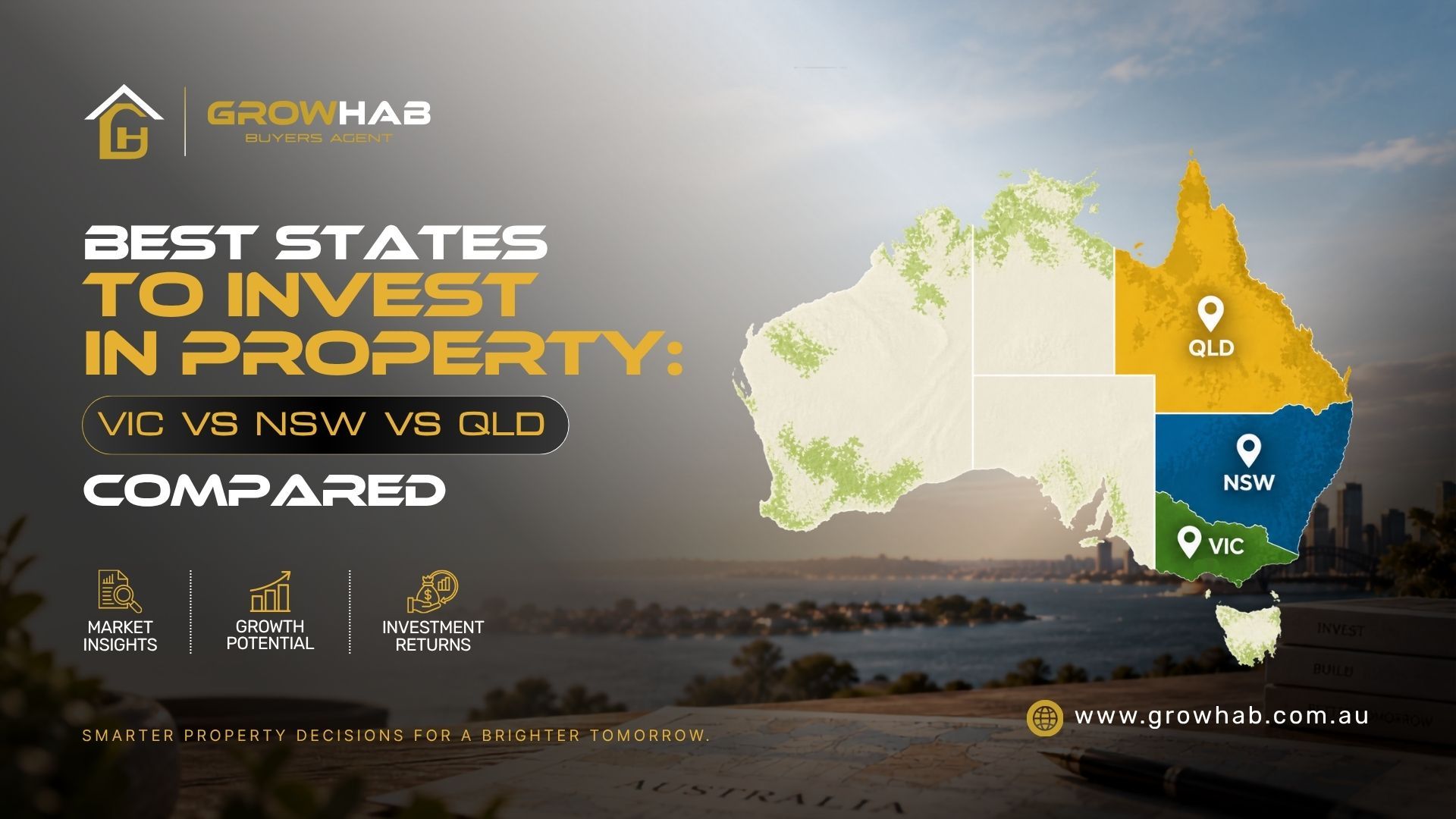
There's no single figure that reliably points to a high-growth suburb on its own. Population growth, supply, vacancy rates, days on market and infrastructure spending all tell part of the story, and it's the combination of these signals, not any one headline number, that separates a genuinely well-positioned suburb from one riding a short-term spike. Checking suburb-level data across VIC, NSW and QLD before committing to a purchase remains the most reliable way to make an informed investment decision.
Pulling all of this together for a single suburb, let alone comparing multiple suburbs across VIC, NSW and QLD, takes time most investors don't have. GrowHab's buyers agents research and shortlist properties using this same combination of population, supply, vacancy and infrastructure data, so you can make an investment decision backed by verified figures rather than guesswork.
Disclaimer: This article is intended for general information only and does not constitute financial or investment advice. Figures referenced are sourced from ABS, SQM Research, Cotality and other publicly available data as at the time of writing and are subject to change. Readers should verify current data and seek independent financial advice before making investment decisions.


Take the
Next Step
We help you understand the market, reduce risk and secure high quality opportunities. Take the first step towards smarter, stress free property investing.

15+ years experience finding high-growth assets for busy professionals.
Quick Links
Legal & Support
Contact

GrowHab,
68 Andrew Lloyd Drive,
Doonside, NSW 2767

02 8806 5416

0480 848 837

info@growhab.com.au
© 2025 Growhab | Website powered by Stroberri